-
Top 10 Hugh Grant Movies
If you like Hugh Grant you should definitely watch our picks for his best movies. Hugh John Mungo Grant born on 9 September 1960 is an English actor and film producer. Grant has received a Golden Globe, a BAFTA, and an Honorary César for his work.
Discover the best…
🍿 popcorn machine: https://amzn.to/2XLcTCX
🌍 VPN service: https://nordvpn.org/communitv
❤️ cTV merchandise: https://bit.ly/2YNbkES
📹 YouTube tool: https://www.tubebuddy.com/communitv
👨🏽💻 Fiverr freelancer: https://bit.ly/3fNGou0
We missed your favorite Hugh Grant Movie? Let us know in the comments!
Follow us on...
Instagram: http://bit.ly/2rnljTB
Facebook: http://bit.ly/2PbYxGn
Show your ❤️ for movies and series: https://bit.ly/2YNbkES
Movies in this Ranking:
10. About a Boy (2002): https://amzn.to/2UiSpzr (00:28)
9. Fo...
published: 07 Jun 2020
-
Grant: Official Trailer | 3-Night Miniseries Event Premieres Memorial Day, May 25 at 9/8c | History
HISTORY’s three-night miniseries event, “Grant,” will premiere over three consecutive nights beginning on Monday, May 25 at 9PM ET/PT on HISTORY. The television event will chronicle the life of one of the most complex and underappreciated generals and presidents in U.S. history – Ulysses S. Grant. “Grant,” tells the remarkable and quintessentially American story of a humble man who overcomes incredible obstacles, rises to the highest ranks of power and saves the nation not once, but twice. With a seamless blend of dramatic scenes, expert commentary and beautifully enhanced archival imagery, this series uncovers the true legacy of the unlikely hero who led the nation during its greatest test: The Civil War and Reconstruction – the herculean task to reconcile the North and the South. One of ...
published: 22 Apr 2020
-
An Affair to Remember (1957) | Cary Grant | Deborah Kerr
Top Romantic Movies of all Time. An Affair to Remember stars the Hollywood Legend Cary Grant, alongside the lovely Deborah Kerr.
As far as Romantic Classics go, this one sets the Standard.
published: 24 Oct 2022
-
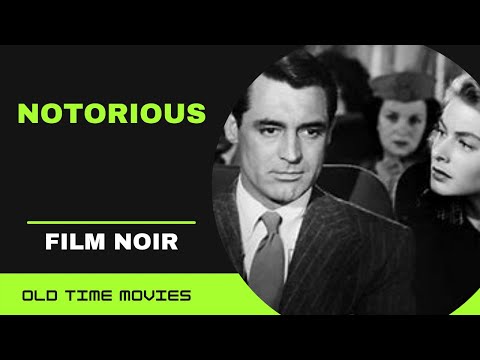
NOTORIOUS (1946) [Alfred Hitchcock] [Ingrid Bergman] [Cary Grant] [Film Noir] Full Movie 720p
Get the movie in DVD here: https://amzn.to/3GfiNQG
Alfred Hitchcock full DVD set here: https://amzn.to/3zK5fKU
Notorious is a 1946 American spy film noir directed and produced by Alfred Hitchcock, starring Cary Grant, Ingrid Bergman, and Claude Rains as three people whose lives become intimately entangled during an espionage operation.
The film follows U.S. government agent T.R. Devlin (Grant), who enlists the help of Alicia Huberman (Bergman), the daughter of a German war criminal, to infiltrate a Nazi organization. The situation becomes complicated when the two fall in love as Huberman is instructed to seduce Alex Sebastian (Rains), a leader of the organization who had previously been infatuated with her. It was shot in late 1945 and early 1946, and was released by RKO Radio Pictures i...
published: 26 Mar 2021
-
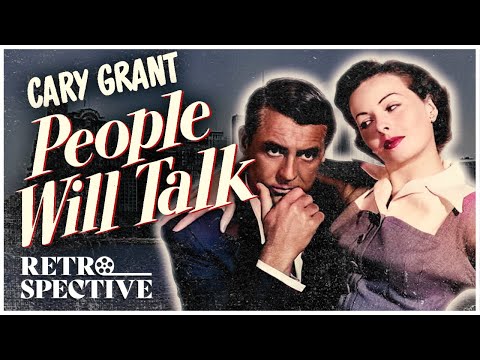
Cary Grant's Classic Movie I People will talk (1951) I Retrospective
Noah, an unorthodox lecturer and physician, is famous among students. This makes another professor, Rodney, jealous and he decides to take revenge when Noah falls in love with one of his students.
Film: People will talk (1951)
Studio:20th Century Fox
Director: Joseph L. Mankiewicz
Writer: Joseph L. Mankiewicz
Cast: Cary Grant, Jeanne Crain, Finlay Currie, Hume Cronyn, Walter Slezak, Sidney Blackmer, Basil Ruysdael, Katherine Locke
Follow us on Instagram https://www.instagram.com/retrospective_film/
Click the link below to check out our high-quality Cinema-inspired gifts and merchandise.
https://www.youtube.com/channel/UCibOdW_Yj0-pj5SQGZxZIgA/store
For more classic movies and clips, subscribe to Retrospective: www.youtube.com/c/Retrospectivefilms
Licensed from:
published: 06 Dec 2022
-
When Games Get a Terrible Movie Adaptation
Name which this reminds you of.
published: 25 Mar 2024
-
Lincoln Instructs Grant
Description
published: 16 Feb 2016
-
My Favorite Cary Grant Line Scene from An Affair To Remember & Deborah Kerr looks Fabulous
published: 24 Jun 2023
-
In The Land Of Saints & Sinners- Movie Review
my review of the action thriller
check out my written reviews at: https://boxd.it/1H6vF
also check out my podcast at: https://open.spotify.com/show/2As0MaILmlIKqMjx3NGLI5?si=ig6ab6MoTvS0a68nePqQOQ
published: 31 Mar 2024
-
UNFROSTED Trailer (2024) Hugh Grant, Melissa McCarthy
UNFROSTED Trailer (2024) Jerry Seinfeld, Melissa McCarthy, Hugh Grant, Amy Schumer, Kelloggs
© 2024 - Netflix
published: 28 Mar 2024
10:58
Top 10 Hugh Grant Movies
If you like Hugh Grant you should definitely watch our picks for his best movies. Hugh John Mungo Grant born on 9 September 1960 is an English actor and film pr...
If you like Hugh Grant you should definitely watch our picks for his best movies. Hugh John Mungo Grant born on 9 September 1960 is an English actor and film producer. Grant has received a Golden Globe, a BAFTA, and an Honorary César for his work.
Discover the best…
🍿 popcorn machine: https://amzn.to/2XLcTCX
🌍 VPN service: https://nordvpn.org/communitv
❤️ cTV merchandise: https://bit.ly/2YNbkES
📹 YouTube tool: https://www.tubebuddy.com/communitv
👨🏽💻 Fiverr freelancer: https://bit.ly/3fNGou0
We missed your favorite Hugh Grant Movie? Let us know in the comments!
Follow us on...
Instagram: http://bit.ly/2rnljTB
Facebook: http://bit.ly/2PbYxGn
Show your ❤️ for movies and series: https://bit.ly/2YNbkES
Movies in this Ranking:
10. About a Boy (2002): https://amzn.to/2UiSpzr (00:28)
9. Four Weddings and a Funeral (1994): https://amzn.to/3gYye3P (01:23)
8. Notting Hill (1999): https://amzn.to/30iNTVp (02:23)
7. Bitter Moon (1992): https://amzn.to/2UjZ7VV (03:21)
6. Paddington 2 (2017): https://amzn.to/3dG20Z5 (04:17)
5. Cloud Atlas (2012): https://amzn.to/30hf5UM (05:14)
4. Sense and Sensibility (1995): https://amzn.to/30hTk72 (06:10)
3. Love Actually (2003): https://amzn.to/2Y5qofY (07:07)
2. Maurice (1987): https://amzn.to/30dQArz (08:02)
1. The Gentlemen (2019): https://amzn.to/2AcZGdj (09:45)
You want to work with us?
For collaboration requests please contact us via…
Mail: hello@communitv.de
We are a participant in the Amazon Services LLC Associates Program, an affiliate advertising program designed to provide a means for us to earn fees by linking to Amazon.com and affiliated sites.
Music: www.bensound.com
https://wn.com/Top_10_Hugh_Grant_Movies
If you like Hugh Grant you should definitely watch our picks for his best movies. Hugh John Mungo Grant born on 9 September 1960 is an English actor and film producer. Grant has received a Golden Globe, a BAFTA, and an Honorary César for his work.
Discover the best…
🍿 popcorn machine: https://amzn.to/2XLcTCX
🌍 VPN service: https://nordvpn.org/communitv
❤️ cTV merchandise: https://bit.ly/2YNbkES
📹 YouTube tool: https://www.tubebuddy.com/communitv
👨🏽💻 Fiverr freelancer: https://bit.ly/3fNGou0
We missed your favorite Hugh Grant Movie? Let us know in the comments!
Follow us on...
Instagram: http://bit.ly/2rnljTB
Facebook: http://bit.ly/2PbYxGn
Show your ❤️ for movies and series: https://bit.ly/2YNbkES
Movies in this Ranking:
10. About a Boy (2002): https://amzn.to/2UiSpzr (00:28)
9. Four Weddings and a Funeral (1994): https://amzn.to/3gYye3P (01:23)
8. Notting Hill (1999): https://amzn.to/30iNTVp (02:23)
7. Bitter Moon (1992): https://amzn.to/2UjZ7VV (03:21)
6. Paddington 2 (2017): https://amzn.to/3dG20Z5 (04:17)
5. Cloud Atlas (2012): https://amzn.to/30hf5UM (05:14)
4. Sense and Sensibility (1995): https://amzn.to/30hTk72 (06:10)
3. Love Actually (2003): https://amzn.to/2Y5qofY (07:07)
2. Maurice (1987): https://amzn.to/30dQArz (08:02)
1. The Gentlemen (2019): https://amzn.to/2AcZGdj (09:45)
You want to work with us?
For collaboration requests please contact us via…
Mail: hello@communitv.de
We are a participant in the Amazon Services LLC Associates Program, an affiliate advertising program designed to provide a means for us to earn fees by linking to Amazon.com and affiliated sites.
Music: www.bensound.com
- published: 07 Jun 2020
- views: 63571
2:08
Grant: Official Trailer | 3-Night Miniseries Event Premieres Memorial Day, May 25 at 9/8c | History
HISTORY’s three-night miniseries event, “Grant,” will premiere over three consecutive nights beginning on Monday, May 25 at 9PM ET/PT on HISTORY. The television...
HISTORY’s three-night miniseries event, “Grant,” will premiere over three consecutive nights beginning on Monday, May 25 at 9PM ET/PT on HISTORY. The television event will chronicle the life of one of the most complex and underappreciated generals and presidents in U.S. history – Ulysses S. Grant. “Grant,” tells the remarkable and quintessentially American story of a humble man who overcomes incredible obstacles, rises to the highest ranks of power and saves the nation not once, but twice. With a seamless blend of dramatic scenes, expert commentary and beautifully enhanced archival imagery, this series uncovers the true legacy of the unlikely hero who led the nation during its greatest test: The Civil War and Reconstruction – the herculean task to reconcile the North and the South. One of the most courageous and unexpected initiatives of Grant’s presidency was protecting the right to vote for the four million freed slaves in the face of violent and widespread resistance.
“Grant” features on-camera interviews with top experts in the field including Ron Chernow, retired United States Army General and former Central Intelligence Agency (CIA) director David Petraeus, acclaimed author and journalist Ta-Nehisi Coates, professor of English at West Point Elizabeth Samet and CEO of the American Civil War Museum in Richmond, VA Christy Coleman to name a few.
Subscribe for more from HISTORY:
http://histv.co/SubscribeHistoryYT
Find out more about this and other specials on our site:
https://histv.co/History
Check out exclusive HISTORY content:
History Newsletter: https://histv.co/newsletter
Website - https://histv.co/History
Facebook - https://histv.co/Facebook
Twitter - https://histv.co/Twitter
HISTORY® is the leading destination for award-winning original series and specials that connect viewers with history in an informative, immersive, and entertaining manner across all platforms. The network’s all-original programming slate features a roster of hit series, premium documentaries, and scripted event programming.
https://wn.com/Grant_Official_Trailer_|_3_Night_Miniseries_Event_Premieres_Memorial_Day,_May_25_At_9_8C_|_History
HISTORY’s three-night miniseries event, “Grant,” will premiere over three consecutive nights beginning on Monday, May 25 at 9PM ET/PT on HISTORY. The television event will chronicle the life of one of the most complex and underappreciated generals and presidents in U.S. history – Ulysses S. Grant. “Grant,” tells the remarkable and quintessentially American story of a humble man who overcomes incredible obstacles, rises to the highest ranks of power and saves the nation not once, but twice. With a seamless blend of dramatic scenes, expert commentary and beautifully enhanced archival imagery, this series uncovers the true legacy of the unlikely hero who led the nation during its greatest test: The Civil War and Reconstruction – the herculean task to reconcile the North and the South. One of the most courageous and unexpected initiatives of Grant’s presidency was protecting the right to vote for the four million freed slaves in the face of violent and widespread resistance.
“Grant” features on-camera interviews with top experts in the field including Ron Chernow, retired United States Army General and former Central Intelligence Agency (CIA) director David Petraeus, acclaimed author and journalist Ta-Nehisi Coates, professor of English at West Point Elizabeth Samet and CEO of the American Civil War Museum in Richmond, VA Christy Coleman to name a few.
Subscribe for more from HISTORY:
http://histv.co/SubscribeHistoryYT
Find out more about this and other specials on our site:
https://histv.co/History
Check out exclusive HISTORY content:
History Newsletter: https://histv.co/newsletter
Website - https://histv.co/History
Facebook - https://histv.co/Facebook
Twitter - https://histv.co/Twitter
HISTORY® is the leading destination for award-winning original series and specials that connect viewers with history in an informative, immersive, and entertaining manner across all platforms. The network’s all-original programming slate features a roster of hit series, premium documentaries, and scripted event programming.
- published: 22 Apr 2020
- views: 465609
1:34
An Affair to Remember (1957) | Cary Grant | Deborah Kerr
Top Romantic Movies of all Time. An Affair to Remember stars the Hollywood Legend Cary Grant, alongside the lovely Deborah Kerr.
As far as Romantic Classics go...
Top Romantic Movies of all Time. An Affair to Remember stars the Hollywood Legend Cary Grant, alongside the lovely Deborah Kerr.
As far as Romantic Classics go, this one sets the Standard.
https://wn.com/An_Affair_To_Remember_(1957)_|_Cary_Grant_|_Deborah_Kerr
Top Romantic Movies of all Time. An Affair to Remember stars the Hollywood Legend Cary Grant, alongside the lovely Deborah Kerr.
As far as Romantic Classics go, this one sets the Standard.
- published: 24 Oct 2022
- views: 62402
1:40:59
NOTORIOUS (1946) [Alfred Hitchcock] [Ingrid Bergman] [Cary Grant] [Film Noir] Full Movie 720p
Get the movie in DVD here: https://amzn.to/3GfiNQG
Alfred Hitchcock full DVD set here: https://amzn.to/3zK5fKU
Notorious is a 1946 American spy film noir direc...
Get the movie in DVD here: https://amzn.to/3GfiNQG
Alfred Hitchcock full DVD set here: https://amzn.to/3zK5fKU
Notorious is a 1946 American spy film noir directed and produced by Alfred Hitchcock, starring Cary Grant, Ingrid Bergman, and Claude Rains as three people whose lives become intimately entangled during an espionage operation.
The film follows U.S. government agent T.R. Devlin (Grant), who enlists the help of Alicia Huberman (Bergman), the daughter of a German war criminal, to infiltrate a Nazi organization. The situation becomes complicated when the two fall in love as Huberman is instructed to seduce Alex Sebastian (Rains), a leader of the organization who had previously been infatuated with her. It was shot in late 1945 and early 1946, and was released by RKO Radio Pictures in August 1946.
Notorious is considered by critics and scholars to mark a watershed for Hitchcock artistically, and to represent a heightened thematic maturity. His biographer, Donald Spoto, writes that "Notorious is in fact Alfred Hitchcock's first attempt—at the age of forty-six—to bring his talents to the creation of a serious love story, and its story of two men in love with Ingrid Bergman could only have been made at this stage of his life."[4] In 2006, Notorious was selected for preservation in the United States National Film Registry by the Library of Congress as being "culturally, historically, or aesthetically significant".
Source: "Notorius"
https://en.wikipedia.org/wiki/Notorious_(1946_film)
NOTORIOUS (1946) [Alfred Hitchcock] [Ingrid Bergman] [Cary Grant] [Film Noir] Full Movie 720p
Alfred Hitchcock
Ingrid Bergman
Cary Grant
Notorious
Film noir
best film noir
best hitchcock movies
film noir 40s
best film noir 40s
full length movie
720p
hd movie
hd
free movies
crime movie
crime
spy
spy movie
spy movies
#filmnoir #notorious #alfredhitchcock #carygrant #ingrindbergman #classicmovie #bestfilmnoir #oldtimemovies
https://wn.com/Notorious_(1946)_Alfred_Hitchcock_Ingrid_Bergman_Cary_Grant_Film_Noir_Full_Movie_720P
Get the movie in DVD here: https://amzn.to/3GfiNQG
Alfred Hitchcock full DVD set here: https://amzn.to/3zK5fKU
Notorious is a 1946 American spy film noir directed and produced by Alfred Hitchcock, starring Cary Grant, Ingrid Bergman, and Claude Rains as three people whose lives become intimately entangled during an espionage operation.
The film follows U.S. government agent T.R. Devlin (Grant), who enlists the help of Alicia Huberman (Bergman), the daughter of a German war criminal, to infiltrate a Nazi organization. The situation becomes complicated when the two fall in love as Huberman is instructed to seduce Alex Sebastian (Rains), a leader of the organization who had previously been infatuated with her. It was shot in late 1945 and early 1946, and was released by RKO Radio Pictures in August 1946.
Notorious is considered by critics and scholars to mark a watershed for Hitchcock artistically, and to represent a heightened thematic maturity. His biographer, Donald Spoto, writes that "Notorious is in fact Alfred Hitchcock's first attempt—at the age of forty-six—to bring his talents to the creation of a serious love story, and its story of two men in love with Ingrid Bergman could only have been made at this stage of his life."[4] In 2006, Notorious was selected for preservation in the United States National Film Registry by the Library of Congress as being "culturally, historically, or aesthetically significant".
Source: "Notorius"
https://en.wikipedia.org/wiki/Notorious_(1946_film)
NOTORIOUS (1946) [Alfred Hitchcock] [Ingrid Bergman] [Cary Grant] [Film Noir] Full Movie 720p
Alfred Hitchcock
Ingrid Bergman
Cary Grant
Notorious
Film noir
best film noir
best hitchcock movies
film noir 40s
best film noir 40s
full length movie
720p
hd movie
hd
free movies
crime movie
crime
spy
spy movie
spy movies
#filmnoir #notorious #alfredhitchcock #carygrant #ingrindbergman #classicmovie #bestfilmnoir #oldtimemovies
- published: 26 Mar 2021
- views: 491439
1:50:29
Cary Grant's Classic Movie I People will talk (1951) I Retrospective
Noah, an unorthodox lecturer and physician, is famous among students. This makes another professor, Rodney, jealous and he decides to take revenge when Noah fal...
Noah, an unorthodox lecturer and physician, is famous among students. This makes another professor, Rodney, jealous and he decides to take revenge when Noah falls in love with one of his students.
Film: People will talk (1951)
Studio:20th Century Fox
Director: Joseph L. Mankiewicz
Writer: Joseph L. Mankiewicz
Cast: Cary Grant, Jeanne Crain, Finlay Currie, Hume Cronyn, Walter Slezak, Sidney Blackmer, Basil Ruysdael, Katherine Locke
Follow us on Instagram https://www.instagram.com/retrospective_film/
Click the link below to check out our high-quality Cinema-inspired gifts and merchandise.
https://www.youtube.com/channel/UCibOdW_Yj0-pj5SQGZxZIgA/store
For more classic movies and clips, subscribe to Retrospective: www.youtube.com/c/Retrospectivefilms
Licensed from:
https://wn.com/Cary_Grant's_Classic_Movie_I_People_Will_Talk_(1951)_I_Retrospective
Noah, an unorthodox lecturer and physician, is famous among students. This makes another professor, Rodney, jealous and he decides to take revenge when Noah falls in love with one of his students.
Film: People will talk (1951)
Studio:20th Century Fox
Director: Joseph L. Mankiewicz
Writer: Joseph L. Mankiewicz
Cast: Cary Grant, Jeanne Crain, Finlay Currie, Hume Cronyn, Walter Slezak, Sidney Blackmer, Basil Ruysdael, Katherine Locke
Follow us on Instagram https://www.instagram.com/retrospective_film/
Click the link below to check out our high-quality Cinema-inspired gifts and merchandise.
https://www.youtube.com/channel/UCibOdW_Yj0-pj5SQGZxZIgA/store
For more classic movies and clips, subscribe to Retrospective: www.youtube.com/c/Retrospectivefilms
Licensed from:
- published: 06 Dec 2022
- views: 2330114
7:55
In The Land Of Saints & Sinners- Movie Review
my review of the action thriller
check out my written reviews at: https://boxd.it/1H6vF
also check out my podcast at: https://open.spotify.com/show/2As0Ma...
my review of the action thriller
check out my written reviews at: https://boxd.it/1H6vF
also check out my podcast at: https://open.spotify.com/show/2As0MaILmlIKqMjx3NGLI5?si=ig6ab6MoTvS0a68nePqQOQ
https://wn.com/In_The_Land_Of_Saints_Sinners_Movie_Review
my review of the action thriller
check out my written reviews at: https://boxd.it/1H6vF
also check out my podcast at: https://open.spotify.com/show/2As0MaILmlIKqMjx3NGLI5?si=ig6ab6MoTvS0a68nePqQOQ
- published: 31 Mar 2024
- views: 81
2:26
UNFROSTED Trailer (2024) Hugh Grant, Melissa McCarthy
UNFROSTED Trailer (2024) Jerry Seinfeld, Melissa McCarthy, Hugh Grant, Amy Schumer, Kelloggs
© 2024 - Netflix
UNFROSTED Trailer (2024) Jerry Seinfeld, Melissa McCarthy, Hugh Grant, Amy Schumer, Kelloggs
© 2024 - Netflix
https://wn.com/Unfrosted_Trailer_(2024)_Hugh_Grant,_Melissa_Mccarthy
UNFROSTED Trailer (2024) Jerry Seinfeld, Melissa McCarthy, Hugh Grant, Amy Schumer, Kelloggs
© 2024 - Netflix
- published: 28 Mar 2024
- views: 245598